Bull, Griffin, Adler: The Rich History in MV's Coat of Arms
Heraldry, the ancient art of devising, displaying, and blazoning arms, offers a fascinating glimpse into the history, identity, and aspirations of regions and nations. For the German federal state of Mecklenburg-Vorpommern (MV), its coat of arms is more than just a decorative symbol; it's a vibrant tapestry woven with centuries of dynastic alliances, territorial shifts, and profound regional pride. If you've ever found yourself asking, "
Wie sieht das Wappen von Mecklenburg-Vorpommern aus?" (How does the coat of arms of Mecklenburg-Vorpommern look like?), prepare to embark on a journey through its captivating design, where each creature tells a story, and every color holds a historical secret.
Mecklenburg-Vorpommern, a land of stunning Baltic Sea coasts, ancient forests, and picturesque lakes, was re-established during Germany's reunification. With its rebirth came the crucial task of forging new state symbols that would authentically represent its diverse constituent parts: the historical regions of Mecklenburg and Vorpommern. The resulting coat of arms, featuring majestic bulls, a fierce griffin, and a proud eagle, perfectly encapsulates this dual heritage and the broader historical connections that define the state today. Let's delve into the intricacies of these powerful emblems, understanding their origins, their distinctions, and the rich narrative they convey.
The Grand Narrative: Decoding the Great State Coat of Arms
The most comprehensive version of the state's emblem is the
Great State Coat of Arms (
Großes Landeswappen), also known as the Principal Coat of Arms. This elaborate design is a testament to the complex historical layers that form modern-day Mecklenburg-Vorpommern. It is primarily used by the highest state authorities, including the State Parliament (
Landtag), the State Government (
Landesregierung), and other supreme state bodies, symbolizing the full sovereignty and historical depth of the region.
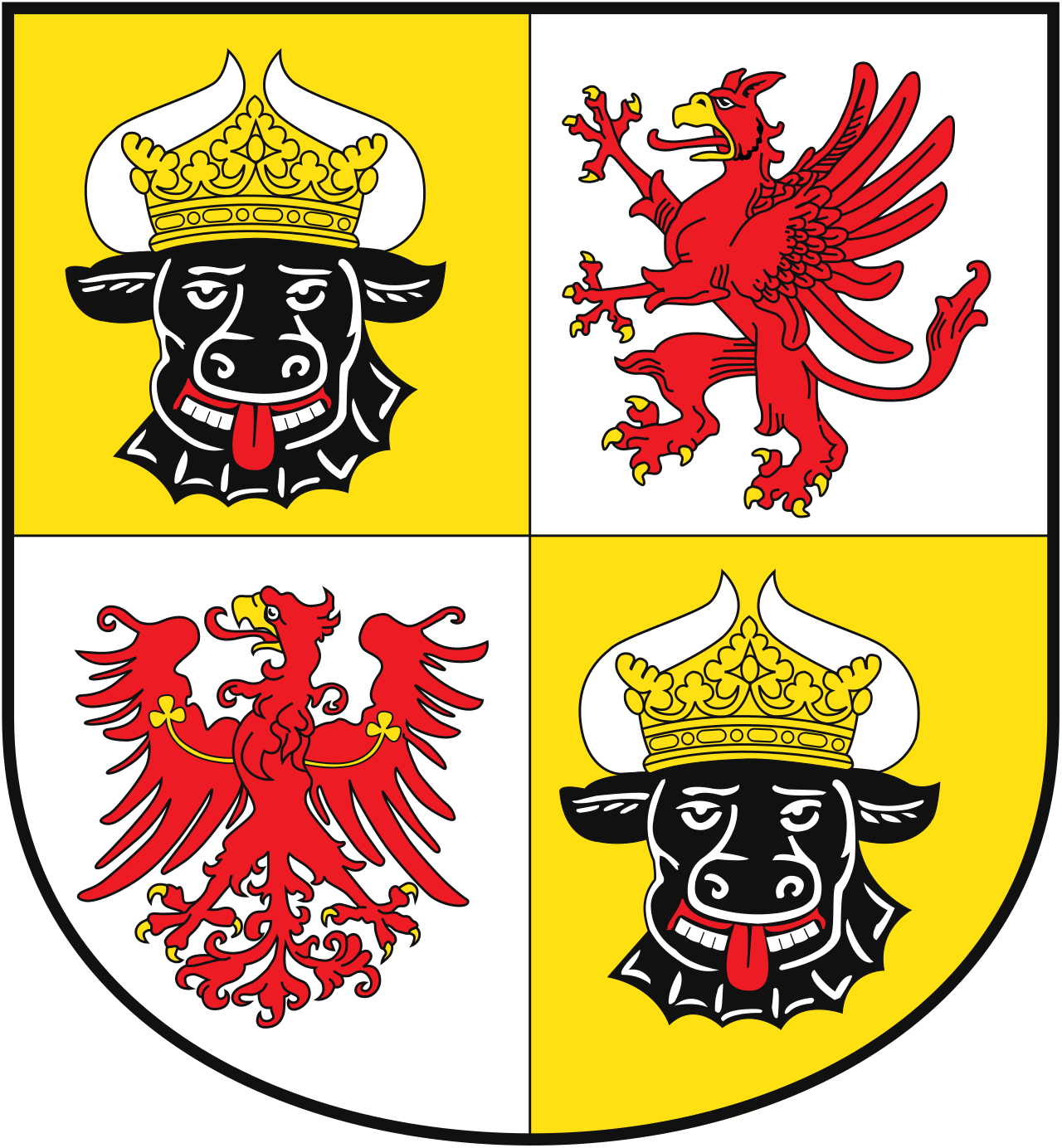
The shield of the Great State Coat of Arms is divided into four distinct quarters, each bearing an animal steeped in history:
- The Mecklenburg Bulls (Top Right and Bottom Left): Occupying the top right and bottom left quarters, from the heraldic bearer's perspective, are two black bull's heads. These powerful symbols feature striking silver horns and a golden crown, set against a golden background. These bulls are not just any bulls; they represent the historical duchies of Mecklenburg-Schwerin and Mecklenburg-Strelitz. For centuries, the bull has been the ancestral emblem of the Mecklenburg princes, symbolizing strength, steadfastness, and the rich agricultural heritage of the region. Their dual appearance in the coat of arms underscores the historical division and subsequent reunification of these significant Mecklenburg territories.
- The Pomeranian Griffin (Top Left): In the top left quarter, against a vibrant silver background, stands a red griffin. Depicted upright in a "rampant" or "greifend" (grasping) posture, this mythical creature – half-eagle, half-lion – is the ancient and proud symbol of Vorpommern. The griffin, often associated with guardianship, strength, and vigilance, perfectly embodies the historical spirit of this Baltic coastal region. Its striking red and silver colors echo the traditional hues of the Duchy of Pomerania, signifying its enduring legacy within the modern state.
- The Brandenburg Eagle (Bottom Right): The bottom right quarter features a red Brandenburg eagle on a silver ground. This eagle is distinctively "gold bewehrt," meaning its beak and claws are golden, and it carries a golden cloverleaf on its wings. This particular eagle serves as a crucial historical reminder of the deep ties between Vorpommern and the neighboring state of Brandenburg. Specifically, it acknowledges those parts of the historical Uckermark region that now lie within Mecklenburg-Vorpommern, reflecting the intricate historical and territorial connections that have shaped the region over centuries. The eagle, a universal symbol of sovereignty and power, represents the historical influence and alliances that played a significant role in the area's development.
This grand design offers a powerful visual narrative, where each animal and its placement contribute to a comprehensive historical overview. It’s a compelling example of how
decoding the Mecklenburg-Vorpommern coat of arms reveals symbols and history that are deeply intertwined with the formation of the state.
Simplicity with Power: The Small State Coat of Arms
While the Great State Coat of Arms is reserved for the highest echelons of government, a more streamlined variant exists for everyday official use: the
Small State Coat of Arms (
Kleines Landeswappen). This simplified version is equally symbolic but designed for practicality, making it suitable for lower state authorities, seals, official letterheads, and even uniforms. It maintains the core identity of the state while offering a more concise representation.
The Small State Coat of Arms is notably two-part, presenting a clear and balanced composition:
- The Mecklenburg Bull (Right Half): On the right half of the shield (from the heraldic bearer's perspective), the black Mecklenburg bull's head with its golden crown is prominently featured against a golden background. This singular bull head effectively represents the entire historical region of Mecklenburg, condensing the symbolism of the two former duchies into one powerful emblem.
- The Pomeranian Griffin (Left Half): Mirroring the bull on the left half of the shield is the red Pomeranian griffin, set against a silver background. Just as in the great emblem, the griffin stands for Vorpommern, symbolizing its unique identity and historical significance.
This dual arrangement of the bull and the griffin highlights the fundamental union of Mecklenburg and Vorpommern, making it instantly recognizable and impactful. The decision to have both a large and a small state emblem showcases a thoughtful approach to official branding and historical representation. To understand more about the practical and symbolic reasons behind these two variants, explore our article on
Large vs. Small: Mecklenburg-Vorpommern's Two State Emblems Explained. This distinction ensures that while the state's full historical depth is preserved in the grand emblem, a more adaptable and easily reproducible version is available for broad governmental use.
A Heraldic Time Capsule: History and Formation
The creation of Mecklenburg-Vorpommern's coat of arms is a relatively recent chapter in a long historical saga, born out of the reunification of Germany in 1990. As a newly constituted federal state, it required symbols that could effectively amalgamate the rich histories of its constituent parts. The challenge was to create an emblem that honored the past while looking towards the future, reflecting the diverse identities of Mecklenburg and Vorpommern.
The individual elements chosen for the coat of arms boast ancient pedigrees:
- The Mecklenburg Bull: This robust symbol has served as the Stammwappen (ancestral or tribal coat of arms) for the Mecklenburg princes since at least the 13th century. It embodies centuries of rule, agricultural prosperity, and the enduring character of the Mecklenburg people.
- The Pomeranian Griffin: The griffin, a creature of myth and legend, has been the heraldic beast of the Duchy of Pomerania for just as long, appearing in seals and coats of arms from the medieval period. It represents the strength, nobility, and sometimes fierce independence of the Pomeranian territories, particularly their connection to the Baltic Sea.
- The Brandenburg Eagle: The Brandenburg eagle's inclusion acknowledges the historical and geographical realities of the region. Parts of the Uckermark, historically associated with Brandenburg, became part of Mecklenburg-Vorpommern, and the eagle serves as a permanent reminder of these intricate borderland connections and shared heritage.
Thus, the state coat of arms functions as a fascinating heraldic time capsule. It doesn't just display animals; it tells a story of princes and dukes, alliances and conflicts, and the eventual forging of a unified identity after centuries of separate histories. It's a testament to how visual symbols can encapsulate the soul of a region, making history tangible and ever-present.
The Colors and Beyond: Flag and Symbolism
Beyond the animals themselves, the colors employed in Mecklenburg-Vorpommern's heraldry and flag carry significant meaning, reflecting both historical lineage and the natural beauty of the land. The state flag is a striking combination of blue, white, yellow, and red. These are not arbitrary choices:
- Blue-Yellow-Red: These three colors represent the historical region of Mecklenburg. Blue often symbolizes the sky and the Baltic Sea, yellow the golden fields of the region, and red the characteristic brick architecture of many towns and cities.
- Blue-White: These are the traditional colors of Vorpommern, again evoking the sea and sky, common elements in this coastal region.
The blending of these color traditions into the state flag beautifully symbolizes the unity of Mecklenburg and Vorpommern. Furthermore, the state service flag takes this symbolism a step further by centrally featuring the prominent figures of the Mecklenburg bull and the Pomeranian griffin, directly linking the flag to the historical depth of the coat of arms. This interplay of color and imagery is a powerful way to express both historical roots and contemporary identity. Recognizing these symbols can greatly enhance your appreciation for the region's heritage during a visit to Mecklenburg-Vorpommern, offering a deeper connection to its unique character.
Conclusion
The coat of arms of Mecklenburg-Vorpommern is a masterpiece of heraldic storytelling, a comprehensive visual lexicon of its past and present. From the powerful Mecklenburg bulls symbolizing enduring strength, to the vigilant Pomeranian griffin guarding its maritime heritage, and the Brandenburg eagle connecting ancient alliances, each element contributes to a deeply resonant narrative. Whether you encounter the elaborate four-quartered Great State Coat of Arms on official government buildings or the simpler two-part Small State Coat of Arms on local authority documents, you are witnessing centuries of history condensed into elegant design. So, the next time you ponder
wie sieht das Wappen von Mecklenburg-Vorpommern aus, you'll see more than just an emblem; you'll perceive a living testament to regional identity, historical resilience, and the proud spirit of one of Germany's most beautiful federal states.