Large vs. Small: Mecklenburg-Vorpommern's Two State Emblems Explained
Mecklenburg-Vorpommern, a captivating federal state nestled in Germany's northeast, boasts a rich tapestry of history, stunning Baltic Sea coastlines, and a deep sense of regional identity. Central to understanding this unique blend of past and present are its official symbols, particularly its state emblems. If you've ever wondered, "Wie Sieht Das Wappen Von Mecklenburg-Vorpommern Aus?" (What does the coat of arms of Mecklenburg-Vorpommern look like?), you're in for a fascinating journey into heraldry. Uniquely, this German state utilizes not one, but two distinct versions of its coat of arms: a comprehensive large state emblem and a more concise small state emblem. Both tell a compelling story of the regions they represent, embodying centuries of history in their carefully chosen symbols.
These dual emblems were meticulously designed after Germany's reunification, when Mecklenburg-Vorpommern was re-established as a federal state in 1990. The aim was clear: create symbols that authentically mirror the historical territories and their enduring legacies within the new administrative entity. Let's delve into the specifics of each variant and unravel the rich narratives woven into their designs.
Unveiling the Grand Design: The Large State Emblem
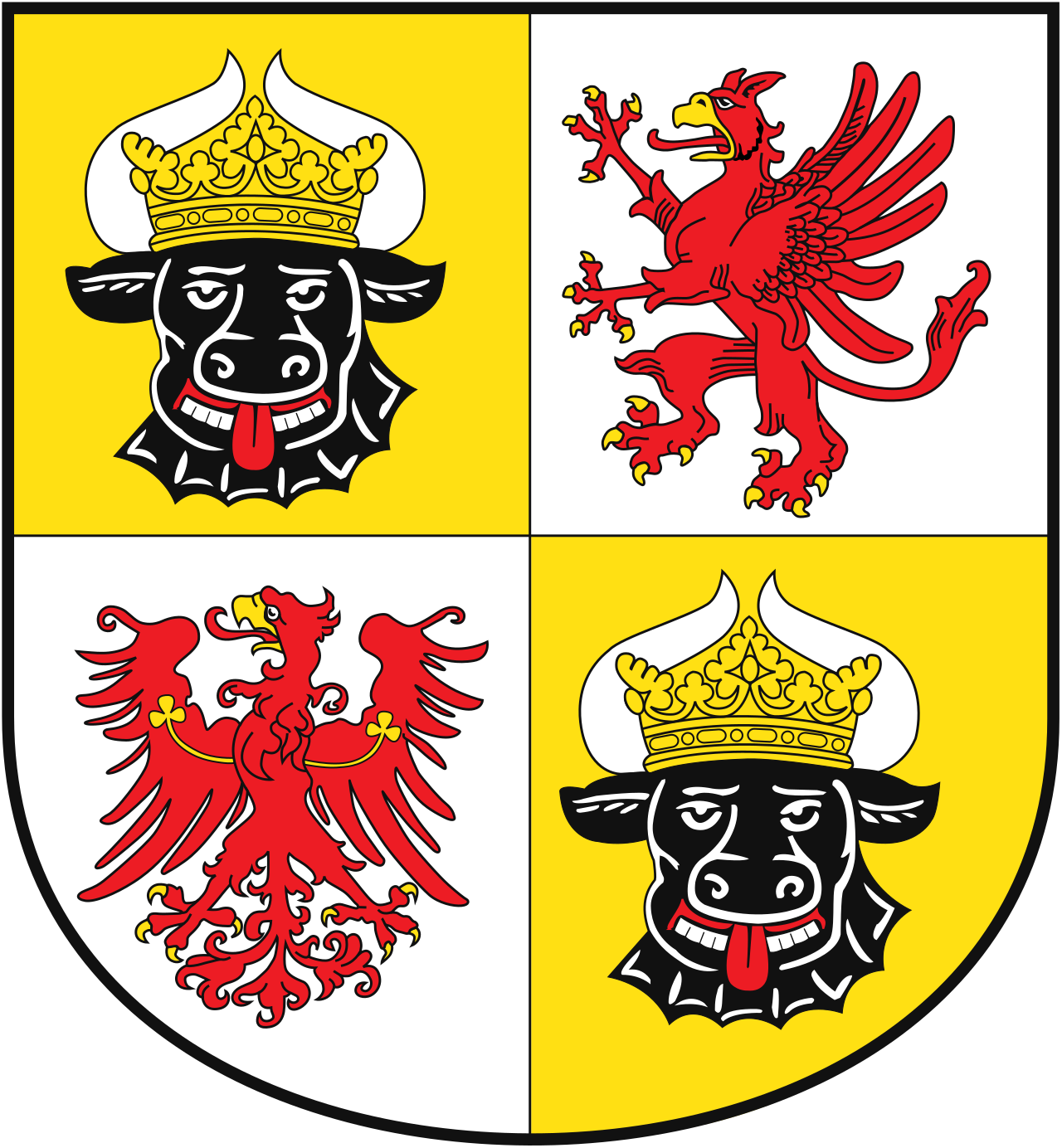
The large state emblem, often referred to as the principal or main coat of arms, is a truly magnificent display of heraldic artistry and historical representation. It features a four-quartered shield, meticulously designed to incorporate the emblems of its constituent historical regions. When viewing this emblem, heraldic descriptions are always from the perspective of the shield's bearer, not the observer.
Here’s a breakdown of its distinctive quadrants:
- Upper Right and Lower Left: The Mecklenburg Bulls
These quarters each display a formidable black bull's head, adorned with gleaming silver horns and a majestic golden crown, all set against a vibrant golden background. These powerful symbols represent the historical duchies of Mecklenburg-Schwerin (upper right) and Mecklenburg-Strelitz (lower left). The bull has been the revered Stammwappen (tribal or ancestral coat of arms) for the Mecklenburg princely houses since the 13th century, embodying strength, fertility, and the enduring spirit of the land.
- Upper Left: The Pomeranian Griffin
In this quarter, a striking red griffin stands proudly on a silver field. Depicted in an upright, "greifend" (grasping) posture, this mythical creature – half eagle, half lion – is the ancient symbol of Vorpommern (Western Pomerania). The griffin signifies power, vigilance, and majesty, guarding the rich heritage of this Baltic Sea region.
- Lower Right: The Brandenburg Eagle
The final quarter showcases a bold red Brandenburg eagle on a silver background. This eagle is distinctively gold-bewehrt (armed with gold) – referring to its golden beak and talons – and features a prominent golden trefoil (Kleeblatt) on its wing. This inclusion is a powerful nod to the historical connections between parts of Vorpommern and the neighboring state of Brandenburg, particularly regions like the Uckermark, which have historical ties or even small segments now lying within Mecklenburg-Vorpommern.
This comprehensive large emblem is reserved for the highest echelons of state authority. You'll typically find it gracing official documents of the Landtag (state parliament), the Landesregierung (state government), and the supreme state authorities. It serves as a potent visual declaration of the state's full historical and administrative identity. To further explore the individual elements and their deep roots, you might enjoy
Decoding the Mecklenburg-Vorpommern Coat of Arms: Symbols and History.
The Compact Representation: The Small State Emblem
In contrast to its grand counterpart, the small state emblem presents a more streamlined, yet equally meaningful, design. This version features a shield divided into just two halves, making it easily distinguishable and suitable for more routine official applications.
Here's how the small emblem is structured:
- Right Half (Bearer's Perspective): The Mecklenburg Bull
On a golden background, this half prominently displays a black Mecklenburg bull's head, complete with a golden crown. This single bull effectively represents the collective Mecklenburg regions.
- Left Half (Bearer's Perspective): The Pomeranian Griffin
Set against a silver field, the left half features the iconic red Pomeranian griffin. This creature succinctly symbolizes Vorpommern.
This smaller, two-part emblem is primarily utilized by lower state authorities. Its practical design makes it ideal for everyday governmental functions, such as appearing on official seals, letterheads, vehicle markings, and even uniforms worn by state employees. It provides an immediate and clear identification of state authority without requiring the full historical detail of the large emblem.
Beyond the Beasts: Symbolism, History, and Modern Relevance
The creation of Mecklenburg-Vorpommern's state emblems wasn't merely an artistic exercise; it was a profound act of identity-building during the momentous period of German reunification. The need for a new flag and coat of arms was paramount to reflect the newly formed state’s dual heritage accurately. The careful selection of the bull, griffin, and eagle encapsulates centuries of regional narratives, offering a visual encyclopedia of the state's past.
*
The Bull of Mecklenburg: Its presence signifies continuity from the powerful noble houses that shaped Mecklenburg from the early Middle Ages. It's a symbol of deep roots, resilience, and connection to the fertile lands of the region.
*
The Griffin of Vorpommern: As a mythical beast, the griffin represents ancient power and wisdom, embodying the historical independence and unique cultural identity of Pomerania, with its strong ties to the Baltic Sea and northern European heritage.
*
The Eagle of Brandenburg: Its inclusion is a testament to the complex and often intertwined territorial histories of Central Europe. It acknowledges geographical overlaps and historical spheres of influence, showcasing Mecklenburg-Vorpommern's place within a broader regional context. For a deeper dive into the specific histories of these fascinating creatures, check out
Bull, Griffin, Adler: The Rich History in MV's Coat of Arms.
The state's flag also tells a similar story of unity. Its colors – blue, white, yellow, and red – are no accident. Blue, yellow, and red historically represent Mecklenburg, while blue and white stand for Vorpommern. United, they form the state flag, with the state service flag featuring the bull and griffin at its center. These colors also carry symbolic weight beyond their heraldic origins: blue and white evoke the sky and the sea, yellow signifies the state's vast fields, and red pays homage to the distinctive red brick architecture prevalent throughout the region.
Practical Insights: Where You'll Encounter Mecklenburg-Vorpommern's Emblems
Knowing the difference between the large and small state emblems adds a layer of appreciation when traveling through Mecklenburg-Vorpommern. Here are some tips on where you might spot them and how to tell them apart:
*
Government Buildings: Keep an eye out for the large, four-quartered shield on major state parliament buildings, ministerial offices, and courts in cities like Schwerin (the state capital) and Rostock. These grand structures often prominently display the comprehensive emblem.
*
Official Documents and Publications: Any high-level official letter, legal document, or state publication will almost certainly feature the large state emblem.
*
Police Vehicles and Uniforms: The smaller, two-part emblem is a common sight on police cars, service uniforms, and other vehicles used by state authorities. Its simpler design makes it easily identifiable even at a glance.
*
Local Authority Offices: When visiting Rathäuser (town halls) or other district (Landkreis) administration buildings, you’ll likely see the small emblem used for local official purposes.
*
Tourist Information Centers: While not official usage, sometimes tourist brochures or regional displays might use simplified versions or composites inspired by the small emblem to represent the state's identity.
*
Historical Sites and Museums: You might encounter historical versions of the bull or griffin emblems on their own, often integrated into architectural details of castles, manor houses, or historical exhibits.
Quick Identification Tip: The easiest way to discern which emblem you're seeing is to count the sections. Four sections, including the Brandenburg eagle, means you're looking at the large state emblem. Two sections, featuring only the bull and griffin, indicates the small state emblem.
Understanding "Wie Sieht Das Wappen Von Mecklenburg-Vorpommern Aus" means appreciating the careful thought and historical reverence embedded in its design. Each variant serves a distinct purpose while collectively narrating the unique story of this captivating German state.
Conclusion
The dual state emblems of Mecklenburg-Vorpommern are more than just official symbols; they are a visual language that speaks volumes about the region's rich history, diverse cultural heritage, and enduring identity. From the majestic, four-quartered shield embodying the historical depth of Mecklenburg-Schwerin, Mecklenburg-Strelitz, Vorpommern, and its Brandenburg connections, to the streamlined two-part emblem representing the unified spirit of Mecklenburg and Vorpommern, each design element tells a vital part of the story. So, the next time you encounter these striking symbols, take a moment to appreciate the centuries of history, regional pride, and careful consideration that went into defining what the coat of arms of Mecklenburg-Vorpommern truly looks like. They are a testament to a state that proudly embraces its past while confidently moving forward.