Decoding the Mecklenburg-Vorpommern Coat of Arms: Symbols and History
The captivating state of Mecklenburg-Vorpommern, nestled along Germany's Baltic coast, boasts a rich history reflected vividly in its official state emblem. For anyone wondering,
Wie Sieht Das Wappen Von Mecklenburg-Vorpommern Aus? – "What does the Coat of Arms of Mecklenburg-Vorpommern look like?" – the answer is a fascinating tableau of heraldic beasts, each telling a story of regional identity and historical mergers. This unique emblem is not merely a decorative symbol; it's a profound visual narrative of unity born from diverse historical territories, expertly combining ancient symbols into a cohesive whole.
At its core, the Mecklenburg-Vorpommern coat of arms is a testament to the state's post-reunification formation in 1990, bringing together the historical lands of Mecklenburg and Vorpommern. This amalgamation necessitated a new state flag and coat of arms that would respectfully represent all constituent regions. The result is a heraldic masterpiece that encapsulates centuries of regional heritage, presented in two distinct yet related versions: a grand, quartered main emblem and a simpler, bifurcated small emblem.
The Grand Tapestry: Deconstructing the Large State Emblem
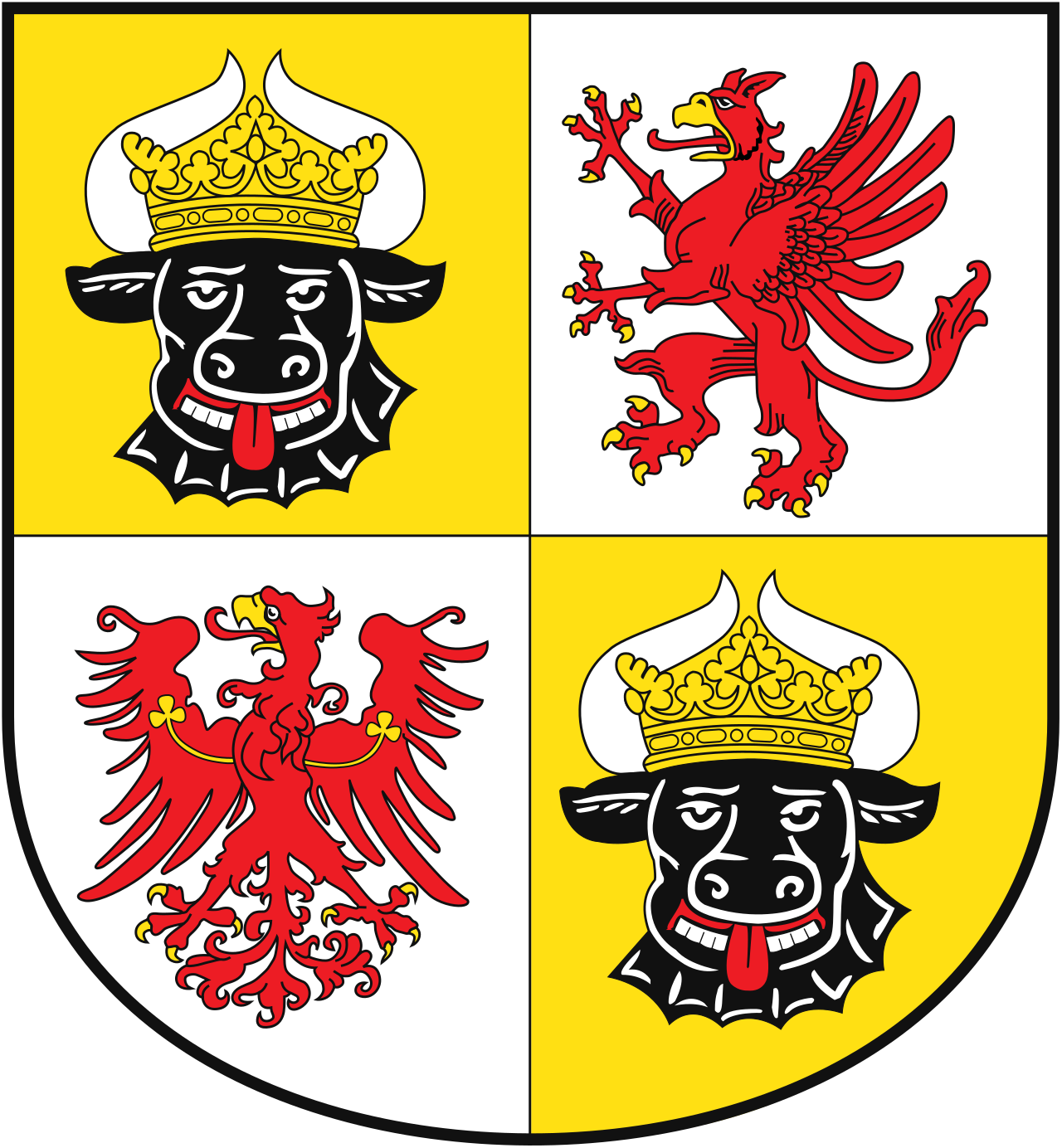
The large state coat of arms, often referred to as the main emblem, is a complex and visually rich symbol, offering a deep dive into the historical geography of Mecklenburg-Vorpommern. This version is a shield divided into four distinct fields, each representing a significant historical territory that contributes to the modern state's identity.
*
Upper Right and Lower Left (from the bearer's perspective): The Mecklenburg Bulls
* These two quarters feature a striking
black bull's head with silver horns and a golden crown on a golden background. These formidable beasts symbolize the historical duchies of Mecklenburg-Schwerin and Mecklenburg-Strelitz. The bull has been a central emblem for the Mecklenburgian princes since the 13th century, rooted deeply in the region's ancient heritage. Its strong, proud stance reflects the enduring spirit of the Mecklenburg lands.
*
Upper Left (from the bearer's perspective): The Vorpommern Griffin
* Dominating this field is a
red griffin on a silver background, depicted rampant and 'gripping'. The griffin, a mythical creature with the body of a lion and the head and wings of an eagle, has long been the iconic symbol of Pomerania (Vorpommern). It embodies strength, nobility, and vigilance – qualities that have historically characterized this coastal region.
*
Lower Right (from the bearer's perspective): The Brandenburg Eagle
* This quarter showcases a
red Brandenburg eagle on a silver background, gold-armed (meaning its beak and talons are golden) and adorned with a trefoil on its wing. The inclusion of the Brandenburg eagle acknowledges the historical ties and territorial overlaps between Pomerania and Brandenburg, specifically referencing parts of the Uckermark region that now lie within Mecklenburg-Vorpommern. It's a nod to the intricate historical and political connections that shaped the region.
This comprehensive large emblem is reserved for the highest state authorities, including the State Parliament (Landtag), the State Government (Landesregierung), and the supreme state agencies. Its intricate design serves as a powerful visual representation of the state's unified yet diverse heritage. To understand the profound historical layers behind each animal, you might find our article
Bull, Griffin, Adler: The Rich History in MV's Coat of Arms particularly insightful.
The Elegant Simplicity: Understanding the Small State Emblem
In contrast to its grand counterpart, the small state coat of arms presents a more streamlined yet equally symbolic representation of Mecklenburg-Vorpommern. This variant is a shield divided into just two halves, making it more practical for everyday use by various state bodies.
*
Right Half (from the bearer's perspective): The Mecklenburg Bull
* On a golden background, this half features the familiar
black Mecklenburg bull's head with a golden crown. This symbol succinctly represents the Mecklenburg historical territories.
*
Left Half (from the bearer's perspective): The Pommern Griffin
* The second half, set on a silver background, displays the characteristic
red Pommern griffin, standing tall and proud. This half proudly signifies Vorpommern.
This smaller, two-part emblem is widely utilized by lower state authorities, such as for official seals, letterheads, and service uniforms. Its design is a clear and direct answer to the question, "Wie Sieht Das Wappen Von Mecklenburg-Vorpommern Aus?" for daily official purposes, emphasizing the core union of Mecklenburg and Vorpommern without delving into the finer historical subdivisions. For a detailed comparison and explanation of when and where each version is used, explore
Large vs. Small: Mecklenburg-Vorpommern's Two State Emblems Explained.
More Than Just a Shield: The Flag and Deeper Symbolism
The symbolism of Mecklenburg-Vorpommern extends beyond the shield of its coat of arms to its vibrant state flag, which also thoughtfully intertwines regional identities. The flag, with its horizontal stripes of blue, white, yellow, red, and white, is a harmonious blend of the traditional colors of its constituent parts:
*
Blue-Yellow-Red: These are the historical colors of Mecklenburg.
*
Blue-White: These represent Vorpommern.
When united, these colors form a distinctive banner. The State Service Flag takes this a step further, placing the iconic bull and griffin – the primary heraldic animals from the small coat of arms – directly in the center of the flag, visually reinforcing the state's identity.
Beyond their historical roots, the colors of the flag also hold poetic symbolic interpretations for the land itself:
*
Blue and White: Often seen as representing the vast skies and the expansive Baltic Sea that defines much of the state's geography.
*
Yellow: Symbolizes the golden fields of agriculture that stretch across the region.
*
Red: Evokes the distinctive red brick architecture prevalent in many historic towns and cities, a hallmark of Northern European Gothic style.
This thoughtful integration of historical colors and symbols into both the flag and the coat of arms underscores the deliberate effort to create a new, unifying identity for Mecklenburg-Vorpommern after German reunification. It's a powerful statement of how diverse historical threads can be woven together to form a strong, contemporary sense of place.
A Journey Through Time: The Historical Roots of MV's Heraldry
Understanding the "Wie Sieht Das Wappen Von Mecklenburg-Vorpommern Aus?" question fully requires a brief look into the long lineage of its heraldic beasts. Each animal carries centuries of significance:
*
The Mecklenburg Bull: The black bull's head has been the dynastic emblem of the House of Mecklenburg since at least the 13th century. Originating from ancient seals, it became the enduring symbol of the Mecklenburgian dukes and grand dukes. Its consistency through the centuries highlights a strong, unbroken regional identity that survived various political changes.
*
The Pommern Griffin: The red griffin has an equally ancient and proud history as the emblem of the Dukes of Pomerania. Legends of the griffin are widespread in European folklore, often associated with guardianship, strength, and divine power. For Pomerania, it symbolized the courage and vigilance of its rulers, particularly important for a maritime region facing various influences.
*
The Brandenburg Eagle: While the primary symbols represent Mecklenburg and Vorpommern, the inclusion of the Brandenburg eagle in the large coat of arms illustrates the fluid nature of historical borders and allegiances. The eagle, a powerful imperial symbol, has been the heraldic animal of Brandenburg for centuries. Its presence signifies the historical connections to areas like the Uckermark, which today are part of Mecklenburg-Vorpommern, reflecting the nuanced territorial developments over time.
The careful selection and arrangement of these symbols in the state coat of arms are more than just aesthetic choices; they are a concise history lesson, offering insights into the political, cultural, and geographical evolution of this unique corner of Germany. This deliberate amalgamation ensures that the past is honored while forging a shared future.
Conclusion
The coat of arms of Mecklenburg-Vorpommern is a captivating example of heraldry serving as a living historical document. Whether encountering the intricate "Grand Tapestry" with its fourfold division or the more streamlined "Elegant Simplicity" of the small emblem, one immediately grasps the essence of this diverse state. For those curious about
Wie Sieht Das Wappen Von Mecklenburg-Vorpommern Aus?, it's an image of strength, history, and unity, embodied by the noble bull, the vigilant griffin, and the powerful eagle. It's a symbol not only of the state's administrative identity but also of the resilient spirit of its people and the enduring beauty of its landscapes, from its tranquil lakes to its windswept Baltic shores.